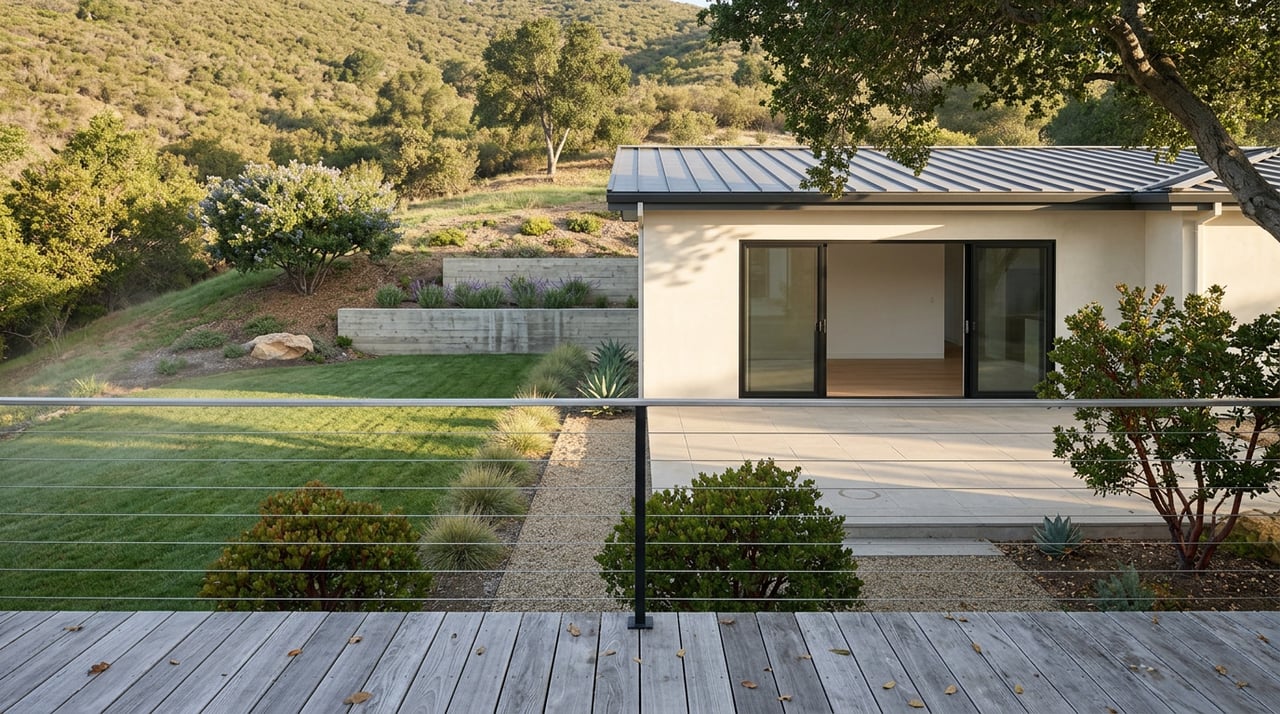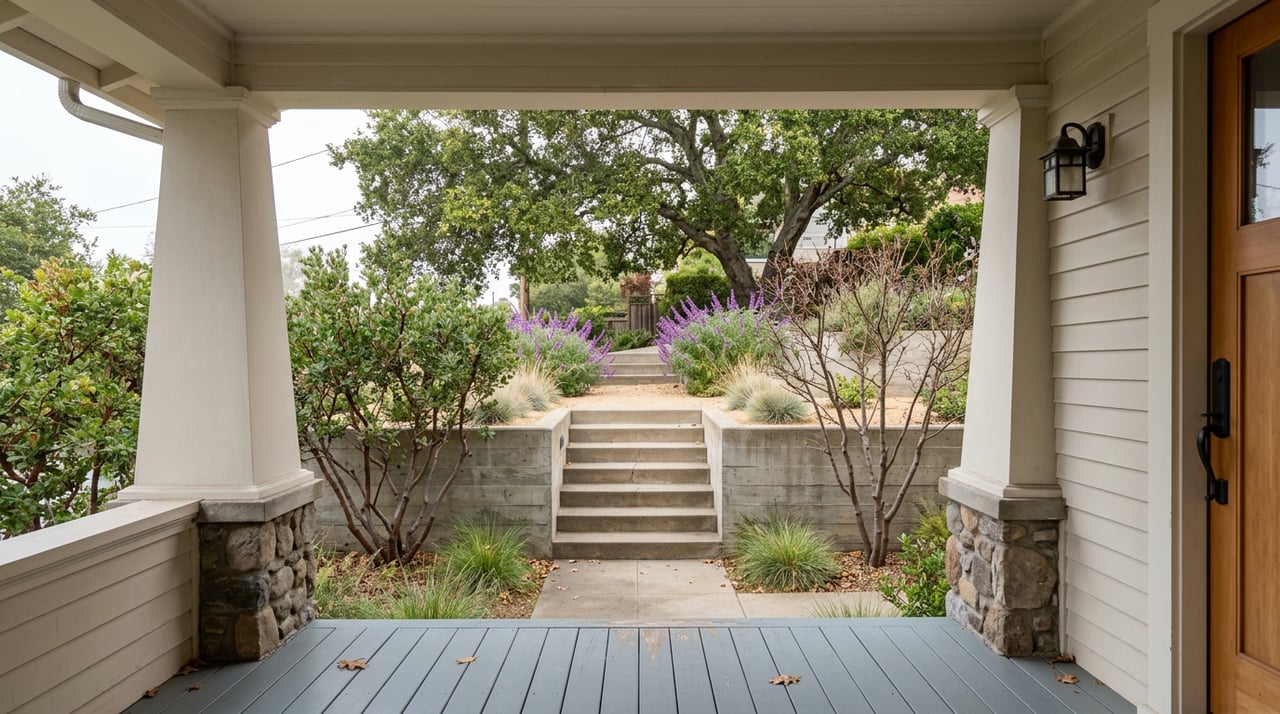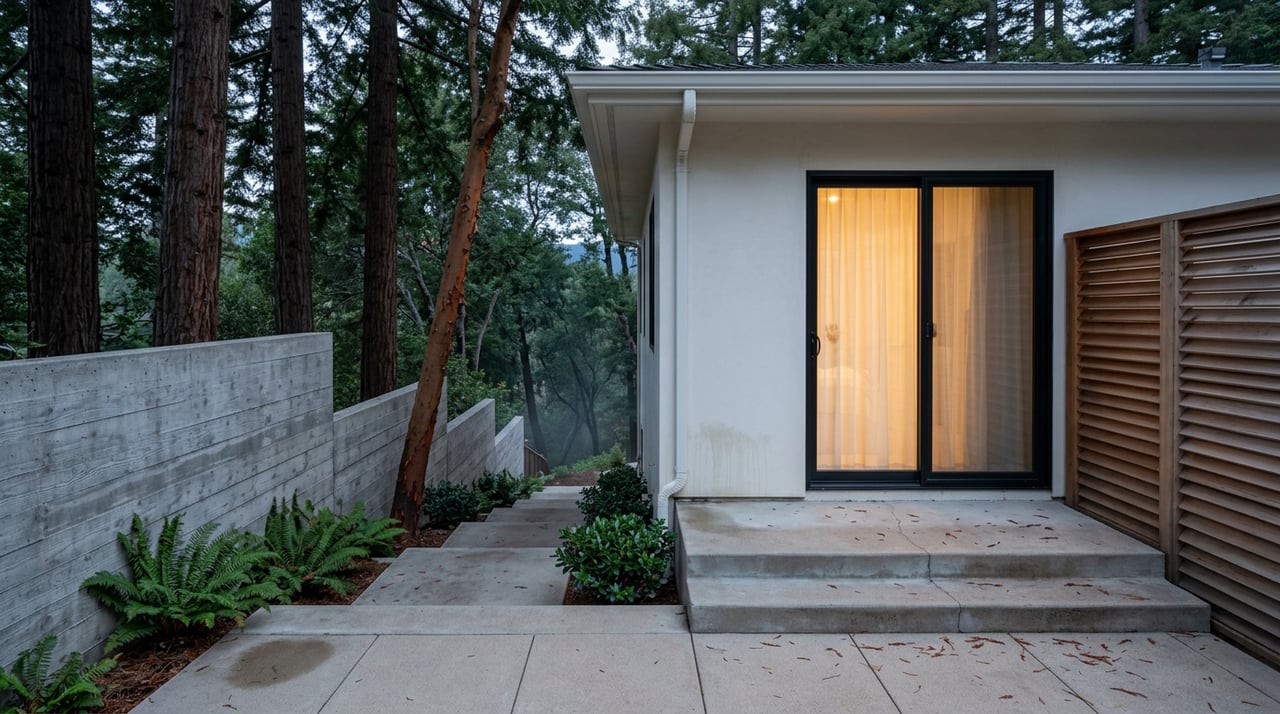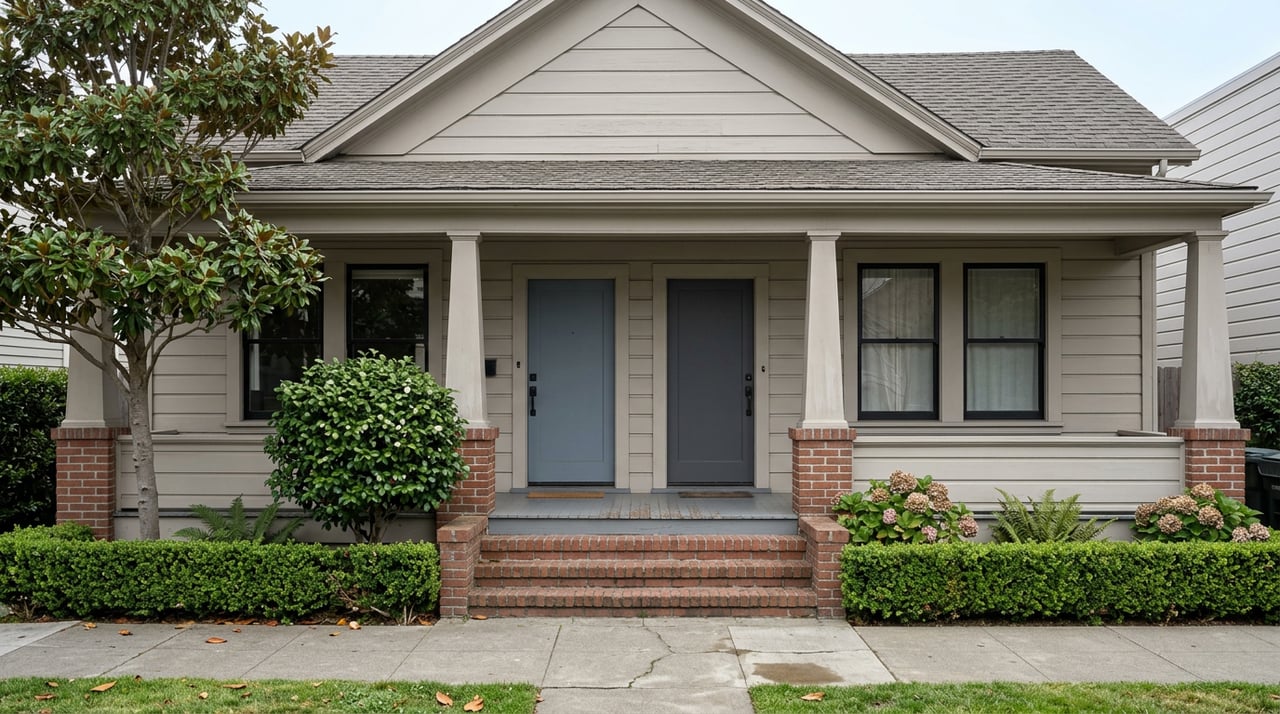
Two duplexes list for sale in Alameda this month. Both sit within walking distance of Park Street. Both show a similar price per square foot. An investor comparing them on a spreadsheet would treat them as interchangeable. They are not.
If one building's certificate of occupancy predates February 1, 1995, its owner can raise rent on a sitting tenant by 1.0% this cycle, no more. If the other building was built after that date, or if it's a condo or single-family home instead of a true multi-unit structure, its owner can raise rent by up to 8.8% under state law right now. Same island, same summer, a rent-growth ceiling nearly nine times apart. The difference has nothing to do with the neighborhood, the school zone, or the view. It comes down to a single date stamped on a decades-old building permit.
The Date That Decides Everything
Alameda's rent ordinance, codified as Alameda Municipal Code Chapter VI, Article XV, doesn't regulate "multifamily housing" as a category. It regulates multi-unit buildings with a certificate of occupancy issued before February 1, 1995. That's the entire test. A duplex built in 1993 falls under the city's full rent stabilization scheme. A near-identical duplex built in 1997 does not.
Properties on the other side of that line, meaning single-family homes, individually owned condos, permitted ADUs, and any multi-unit building completed after February 1995, are shielded from Alameda's local rent cap by the state's Costa-Hawkins Rental Housing Act. They still have to register with the city, still owe program fees, and still have to follow just-cause eviction rules. What they don't have to follow is the city's own Annual General Adjustment.
What 1.0% and 8.8% Actually Mean for the Same Rent Roll
For buildings on the fully regulated side, the Alameda Rent Program set the current Annual General Adjustment at 1.0% for the period running September 1, 2025, through August 31, 2026. That figure comes from a formula: 70% of the regional Consumer Price Index change, with a floor of 1.0% and a ceiling of 5.0%. This cycle landed at the floor, meaning the ordinance's built-in minimum is doing the work, not the market.
Properties exempt from that local cap instead follow the statewide Tenant Protection Act, which runs on its own calendar, August 1 through July 31 rather than the city's September-to-September cycle. For the period that just began on August 1, 2026, and runs through July 31, 2027, the maximum allowable increase for Alameda County, including the San Francisco, Oakland, and Hayward metro area, is 8.8%, built from a 3.8% April 2026 regional Consumer Price Index reading plus the law's standard 5% base, as confirmed by CPI-based analyses of the new cap year. That's up from 6.3% during the prior twelve months, when the same formula used a lower CPI reading. The California Attorney General's office confirms the underlying rule: 5% plus the change in the cost of living, capped at 10%, whichever is lower.
Run that gap through a real rent roll. A pre-1995 building charging $2,500 a month per unit can add $25 this cycle. A post-1995 building at the same rent can add $220 on the same tenant, nearly nine times the increase, for a building that might sit two blocks away. Over a five-year hold, that gap compounds into a materially different pro forma, and it has nothing to do with location, condition, or amenities. It's the certificate of occupancy date.
The Two Tracks, Side by Side
| Fully Regulated (built before Feb. 1, 1995) | Costa-Hawkins Exempt (single-family, condo, ADU, or built after Feb. 1, 1995) | |
|---|---|---|
| Annual rent cap on a sitting tenant | City's own Annual General Adjustment: 1.0% through August 31, 2026 | Statewide AB 1482 cap: 8.8% for the cycle running August 1, 2026 through July 31, 2027 in the SF metro region |
| Relocation payment for a no-fault eviction | City-set Permanent Relocation Payment, $6,604 to $17,489 depending on unit size and household vulnerability | Governed by state law rather than the city's own payment schedule |
| Annual registration | Required by August 31, tied directly to the right to raise rent | Still required, still owes program fees, but not tied to the local rent cap |
| Typical Alameda location | Gold Coast, Bronze Coast, Central Alameda near Park Street, West End near Webster Street | Mostly single-family homes and condos citywide, since genuine post-1995 multi-unit buildings are uncommon on the historic island |
Where the Two Tracks Actually Sit on the Island
This is where the mechanism gets interesting for anyone shopping the island seriously. Alameda's multi-unit housing stock skews heavily toward the Victorian and Craftsman era. Current listings make the point on their own. A Queen Anne Victorian on Central Alameda's Mozart Street, a triplex a block off Park Street, a 1895 duplex on the edge of the Gold Coast, a five-unit building in the West End near Webster Street: these buildings were converted or built for multiple households decades before the 1995 cutoff existed. Nearly every classic multi-unit property in Alameda's most walkable, most listed neighborhoods was built well before the line that would exempt it.
That means the Costa-Hawkins exemption, the "escape hatch" from local rent control that sounds like it should apply broadly to newer product, barely functions for genuine multi-unit buildings on this island. Post-1995 multi-unit construction is scarce in Alameda's core neighborhoods. The exemption mostly protects a different category of property altogether: single-family homes and condos, which make up most of what's actually shielded from the local cap, not duplexes and triplexes competing for the same buyer pool. An investor hunting for an exempt small multifamily asset in Central Alameda, the Gold Coast, or the West End should assume the fully regulated track applies until a certificate of occupancy proves otherwise.
The Paperwork That Catches Out-of-Area Buyers
The rent cap gap is the headline number, but the compliance mechanics carry their own risk for a buyer moving from a less regulated market.
Every new tenancy in a covered unit requires Form RP-208, a disclosure of the tenant's rights under the ordinance, delivered at or before move-in. Skip it, and the city can invalidate later administrative actions tied to that tenancy, including eviction filings. A buyout offer to a tenant requires Form RP-205 before the tenant signs anything.
Registration itself has a hard deadline. Fully regulated properties must register and pay program fees by August 31 each year. Miss it, and the building falls into what the ordinance treats as substantial non-compliance, which blocks the owner's right to raise rent at all and triggers late fees that compound at 10% per unit, per month, up to a 60% maximum penalty. None of this shows up in a standard rent roll or a title report. It shows up the first time an out-of-state buyer tries to serve a routine rent increase and discovers the prior owner never registered.
No-fault evictions on the fully regulated side, meaning owner move-in, Ellis Act withdrawal, or compliance with a government order, trigger mandatory Permanent Relocation Payments ranging from $6,604 for a studio at the base rate up to $17,489 for a four-bedroom unit housing a qualified household, defined as tenants who are seniors, have a disability, or have minor children. Half is due when the tenant confirms they'll vacate, the other half within three business days after move-out.
What This Means at the Underwriting Table
Alameda's multifamily listings currently include everything from a seven-unit Bronze Coast property near the beach and lagoon to a turnkey four-unit building on Central Avenue to a Victorian triplex near Park Street, spanning a wide range of asking prices. One listed Bronze Coast portfolio advertises a cap rate near 6.82% once vacant units lease up. None of that number means much until you know which regulatory track the building sits on. A 6.82% projected cap rate built on the assumption of unlimited rent resets on turnover looks very different once you confirm the building predates 1995 and its ongoing rent growth on sitting tenants is capped at 1.0% a year rather than 8.8%.
Before running a pro forma on any Alameda duplex, triplex, or small apartment building, confirm the certificate of occupancy date, not just the year the seller says the building "feels like." That single fact determines whether the rent growth column in your model should use the city's Annual General Adjustment or the statewide AB 1482 ceiling, and it determines what you'd owe a displaced tenant if your exit strategy ever involves owner move-in.
A Few Questions Worth Settling Before You Write an Offer
Does the exemption depend on the neighborhood I'm buying in? No. It depends on the certificate-of-occupancy date and the property type, not the address. A building in the Gold Coast and a building on Bay Farm Island follow the identical test.
If my duplex has a permitted ADU, does that make it a three-unit building subject to full regulation? Not automatically. The ordinance specifically carves out two-unit parcels consisting of a single-family home with an approved accessory dwelling unit, keeping that combination outside the fully regulated category even though it houses two households.
Do I still have to register with the city if my property is exempt from the rent cap? Yes. Registration and program fees apply even to properties shielded from the local Annual General Adjustment. Exemption from the rent cap is not exemption from the paperwork.
What's the practical difference between the city's cap and the state's cap, and which one applies to me? The city's Annual General Adjustment applies only to multi-unit buildings with a certificate of occupancy before February 1, 1995, and currently sits at 1.0% through August 31, 2026. Everything else covered by rent limits, including single-family rentals, condos, and newer multi-unit buildings, follows the statewide AB 1482 cap instead, which just rose to 8.8% for the cycle that began August 1, 2026.
Buying a small multifamily property in Alameda without confirming which side of this line it sits on means underwriting a rent-growth assumption that could be wrong by a factor of nearly nine. Shalaya Shipman works with investors across the Bay Area and Los Angeles who need pricing built on the actual regulatory status of a property, not the asking agent's description of it. Get your free home valuation and a clear read on where a specific Alameda property sits before you write an offer.