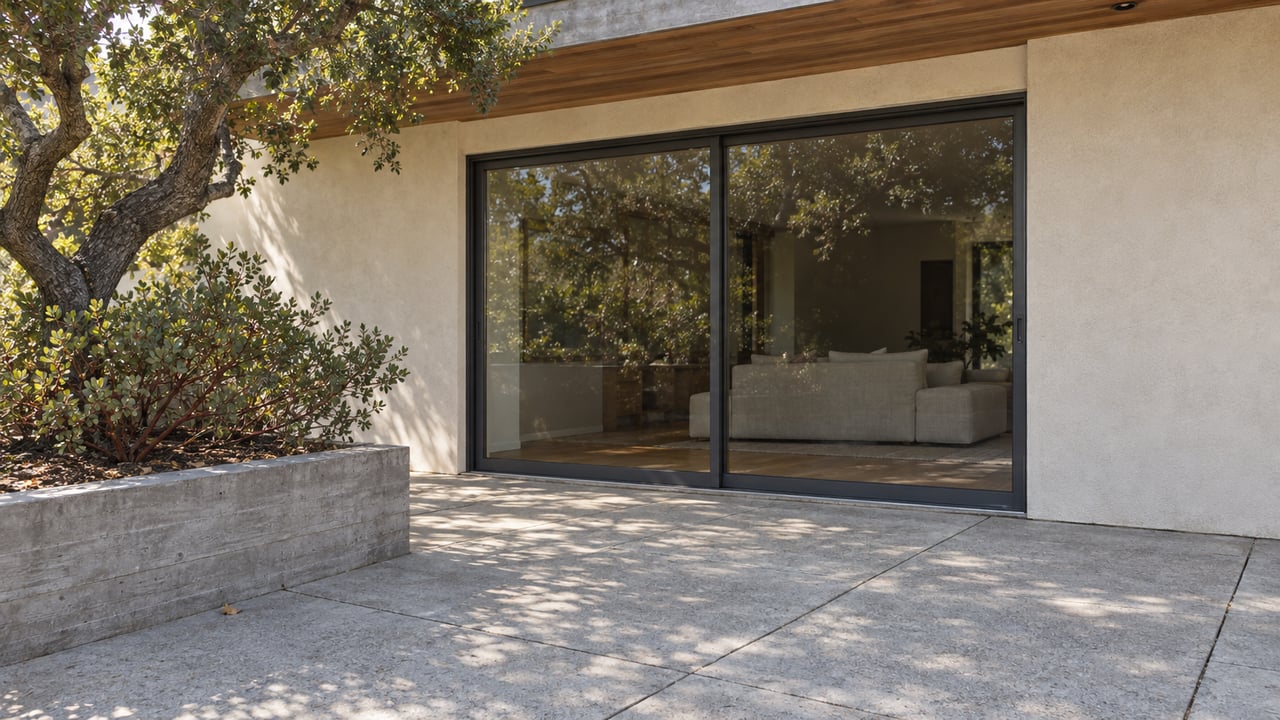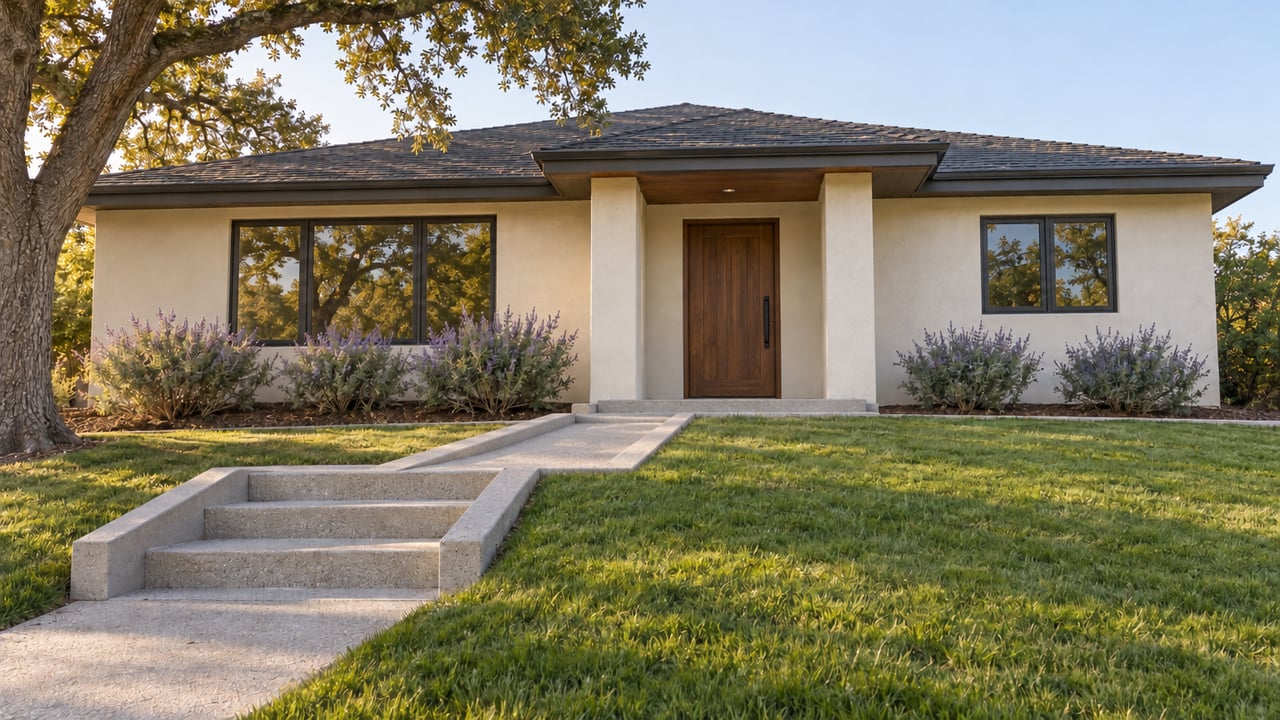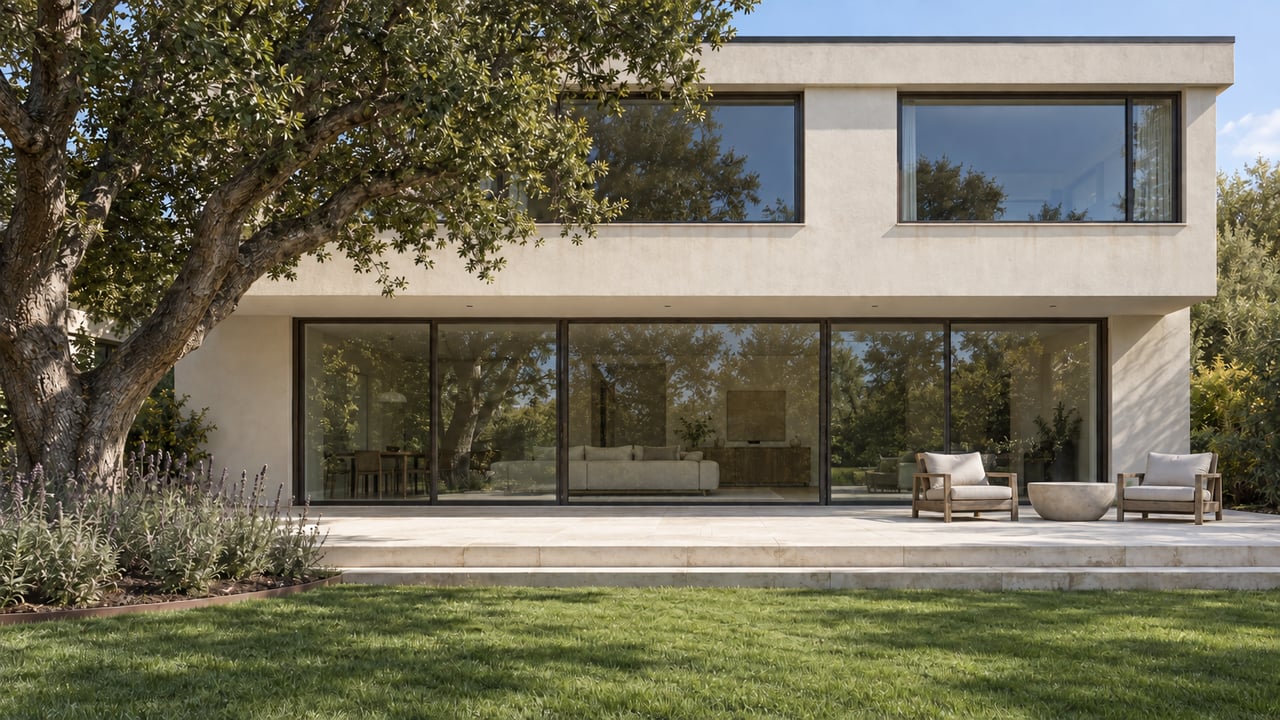
In May 2026, a contemporary home on almost an acre in Encino's Rancho Estates came on the market at $6.5 million. When Robb Report covered the closing on September 9, 2026, the reported sale price was $5.399 million. That price is $1,000 below the $5.4 million line where the City of Los Angeles begins charging its Measure ULA transfer tax on closings after June 30, 2026.
The upper end of the Los Angeles market shows a pattern that the median price doesn't capture.
The tax applies to the whole price
Most taxes rise gradually with the price. Measure ULA works more like a cliff. For transactions closing after June 30, 2026, the Los Angeles Office of Finance lists the ULA rates as 4% on sales over $5,400,000 and under $10,900,000, and 5.5% on sales of $10,900,000 or more. The rate applies to the full consideration, not just the amount above the threshold. It also sits on top of the City's base transfer tax of 0.45%, so the combined City rates are 4.45% and 5.95%. The Los Angeles County Registrar-Recorder adds a county documentary transfer tax of $1.10 per $1,000, for a combined base of $5.60 per $1,000 before any ULA amount.
Clustering below the line shows up across the city
The Encino sale fits a pattern researchers have measured citywide. A July 2026 report from Pepperdine and Beacon Economics found that the share of Los Angeles transactions above the ULA thresholds fell after the tax took effect. The report also found that "visible clustering emerged immediately below the thresholds themselves." It estimates that monthly high-value transaction counts fell about 41% relative to surrounding jurisdictions, with no statistically significant effect below the threshold.
In its preferred single-family specifications, which control for square footage, age, bedrooms and pools, sale prices in Los Angeles underperformed surrounding jurisdictions by roughly 6 to 7% after ULA. In the $5 million-and-above segment, the gap was roughly 11 to 12%.
An earlier study reached a similar conclusion with a different method. The UCLA Lewis Center's April 2025 analysis estimated that ULA cut the odds of a transaction exceeding the applicable threshold by roughly half. That works out to an estimated 49 to 55% fewer above-threshold transactions in the tax's first 20 months. UCLA describes its results as suggestive rather than definitive proof of cause. Pepperdine also says the "missing" sales could reflect repricing below the threshold, buyers moving to another jurisdiction, delayed sales, or deals that never happened.
Why the line matters more in 91436
Most of the San Fernando Valley never comes near the threshold. The Southland Regional Association of Realtors recorded a Valley-wide single-family median of $1,101,000 across 402 closings in September 2026, according to the Valley News Group's October 15, 2026 report. The ULA line sits at nearly five times that figure.
Encino is the exception. The City's public Revenue Generated by Measure ULA dataset assigns each taxed transfer to a ZIP code based on the first parcel conveyed. The dataset was last updated June 9, 2026, and covers activity from the tax's start through roughly May 2026. In that window, ZIP 91436 produced about $23.2 million in ULA revenue across 45 taxed transfers. That ranks 10th of the 108 ZIP codes with records, ahead of 91311 at 16th and 91423 at 23rd. ZIP 91316, Encino's other ZIP code, produced about $9.8 million across 26 transfers and ranks 37th.
The split by tier is even more useful. The dataset labels its bands with the earlier thresholds of $5.3 million and $10.6 million.
| ZIP | Lower ULA band transfers | Lower band revenue | Top band transfers | Top band revenue |
|---|---|---|---|---|
| 91436 | 30 | about $8.76M | 15 | about $14.47M |
| 91316 | 21 | about $5.68M | 5 | about $4.11M |
In 91436, the 15 top-band sales produced more revenue than the 30 sales in the lower band. Encino therefore has meaningful activity at both cliffs, not just the first one.
Encino listings and the ULA line
The Rancho Estates home listed at $6.5 million and closed at $5.399 million. A separate Encino-area listing that Robb Report covered in March 2026 was cut to just under $7 million after nearly two years on the market, which is still above the line.
The City adjusts the ULA thresholds annually using the Bureau of Labor Statistics Chained Consumer Price Index. The $5.4 million and $10.9 million lines apply to closings after June 30, 2026, so a sale from an earlier year was priced against a different line.
On December 15, 2025, a California Court of Appeal affirmed the dismissal of the Howard Jarvis Taxpayers Association's challenge, according to Courthouse News. The Los Angeles Times reported on June 26, 2026 that a 2026 statewide effort to roll back transfer taxes was withdrawn after a deal, and that the tax had raised more than $1.24 billion over its first three years. Proposition TE was on the city's November 3, 2026 ballot. As LAist described it, the proposed measure addressed qualifying residential properties damaged or destroyed in the Palisades Fire and sold by their January 7, 2025 owner of record.
Measure ULA resources
The Office of Finance Measure ULA FAQ has a calculator and links to the ULA dashboard maintained by the Los Angeles Housing Department.
This post is general information, not legal, tax or financial advice. How the tax applies to a specific sale, and who pays it, should be confirmed with your attorney, tax advisor and escrow officer.
If you're considering selling your Encino home, Shalaya Shipman can run a valuation. Get your free home valuation.